How much does stump grinding cost?
Most residential stumps run $100 to $400, driven by diameter, how many roots run out from it, and whether the machine can get to it. A stump behind a narrow gate costs more than the same stump in an open front yard because a smaller machine takes longer. Done at the same visit as the tree removal it is cheaper again, since the crew and the equipment are already there.
How deep do you grind a stump?
Roughly twelve inches below grade as standard, which is deep enough to lay sod over the top or plant grass into fresh soil. If you intend to plant a new tree in the same spot, say so before we start and we will go deeper, because a sapling needs real root room rather than a bed of wood chips.
What is left behind afterward?
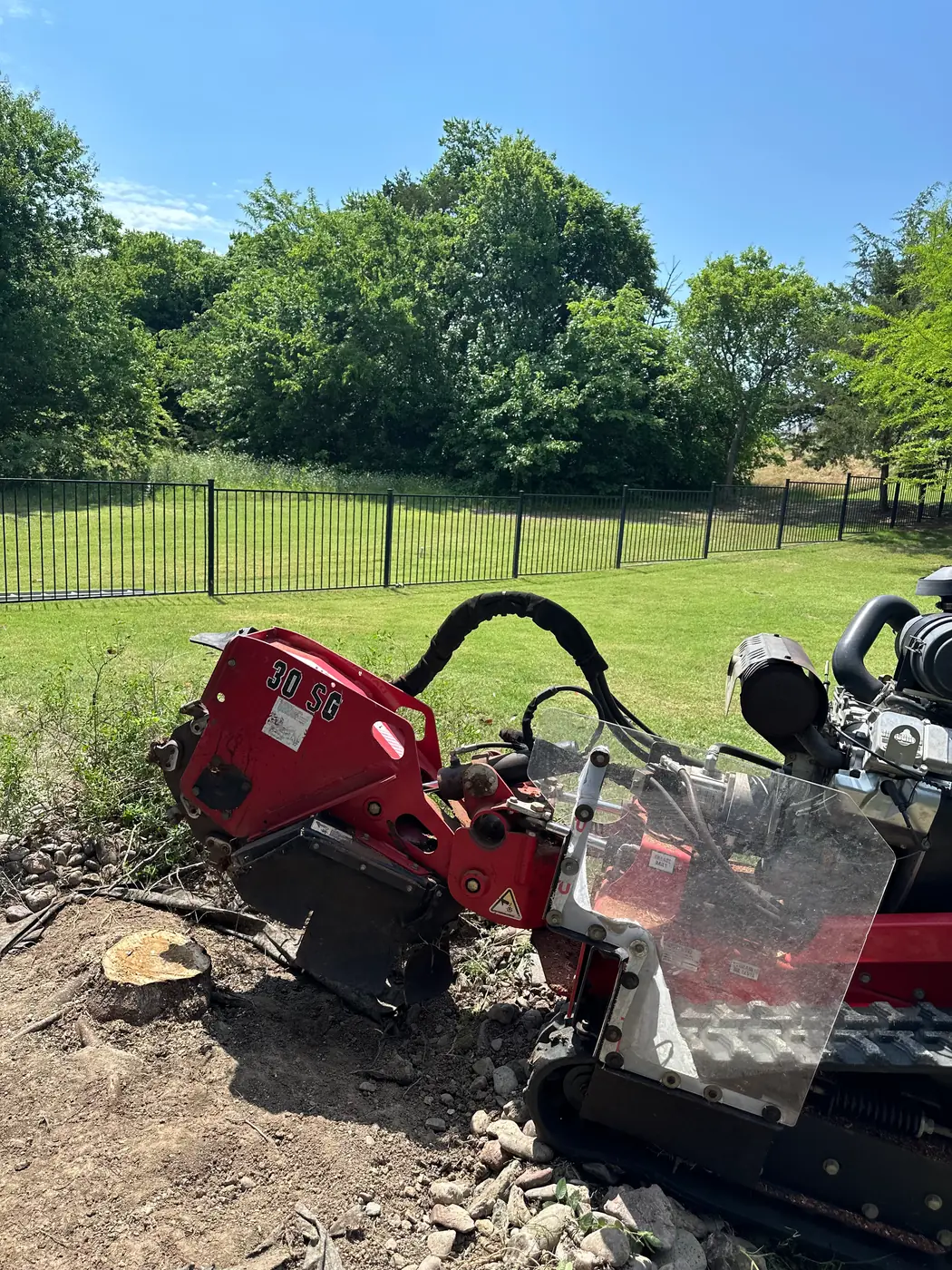
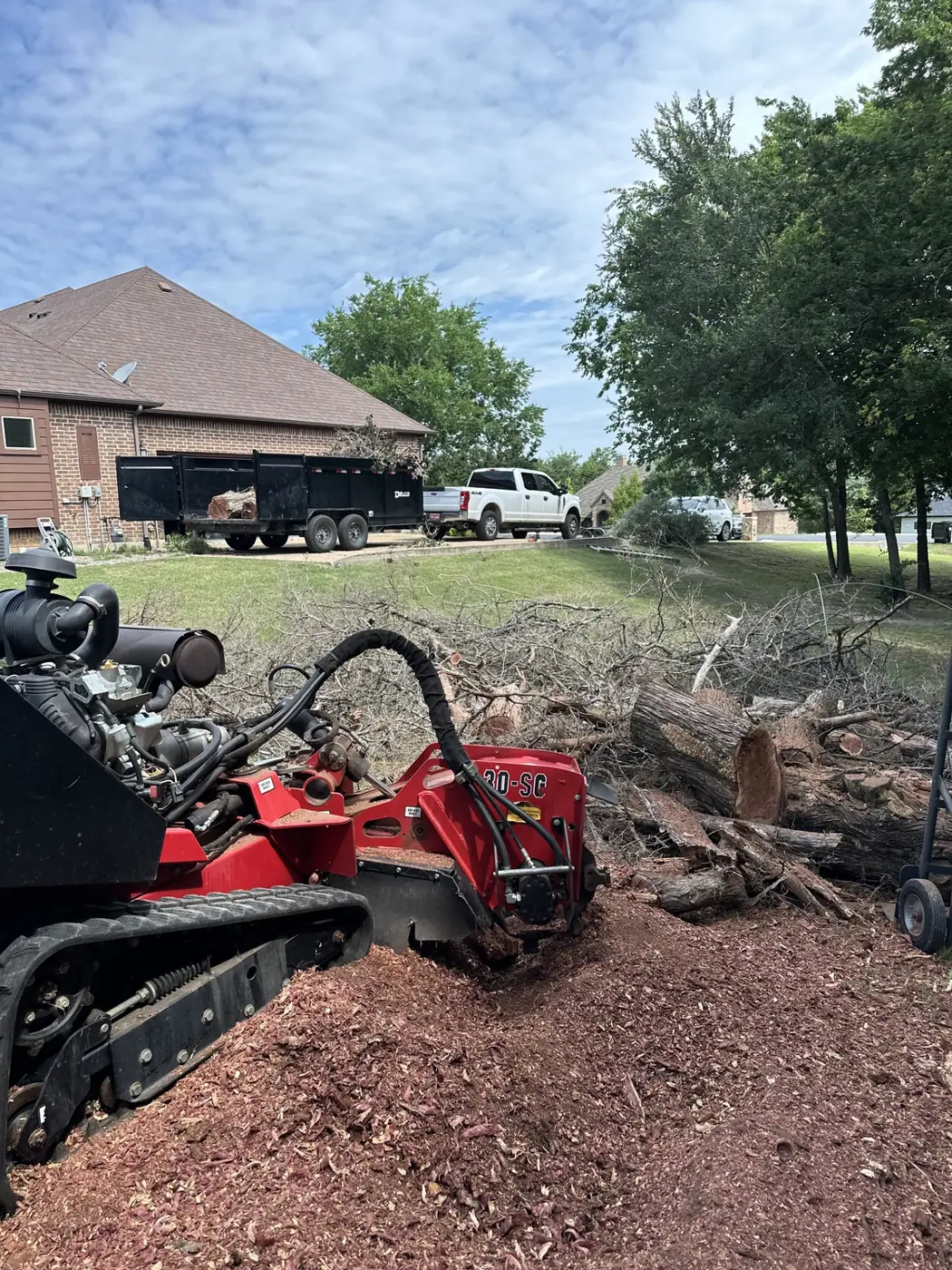
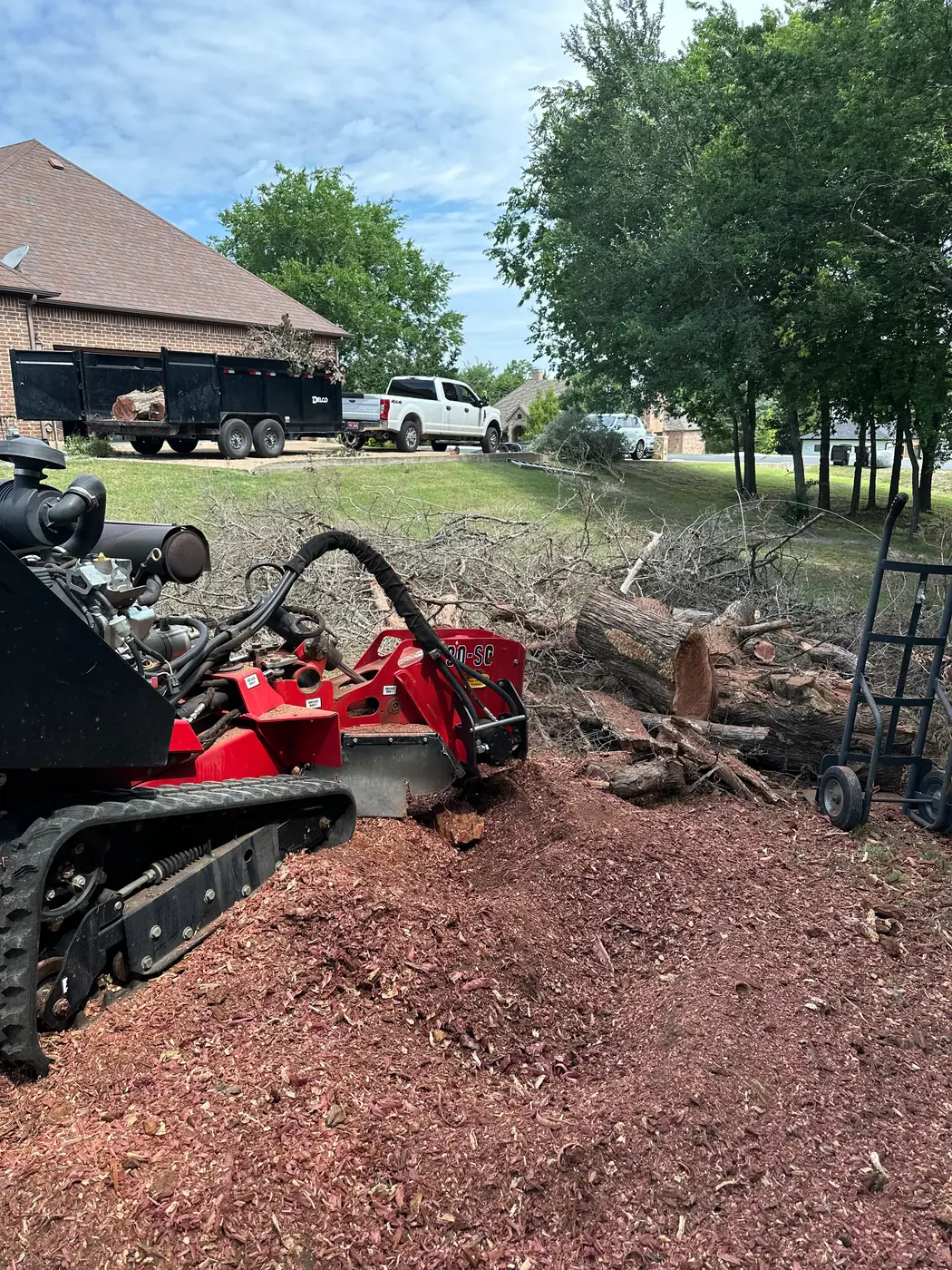
A hole full of wood chips and soil, and more chips than you expect. We rake it level and either haul the grindings off and backfill with topsoil, or leave them for you to use as mulch. Either way the turf edge is cleaned up and the site is blown down before we go.
Can I plant grass or a new tree where the stump was?
Grass, yes, once the chips are removed and topsoil goes in. A new tree in the exact same spot needs more work: decaying wood chips tie up nitrogen as they break down and there is not enough soil volume for new roots. We grind deeper and remove more material when you tell us that is the plan. Otherwise, plant the replacement a few feet to one side.
Do the roots keep growing after grinding?
No. Once the stump and the top of the root plate are ground out, the roots have no leaves feeding them and they die and decompose in the ground. That is exactly why grinding is worth it on species like hackberry, mulberry, and cedar, which will resprout from a cut stump for years if you only take the trunk.
What is the difference between stump grinding and stump removal?
Grinding chips the stump and the top of the roots out in place. Full removal digs the entire root plate out with an excavator, which leaves a large crater, costs several times more, and tears up whatever is around it. Grinding is the right answer for almost every residential situation. Full excavation only makes sense when something is going to be built on that exact spot.
Do I really need the stump ground at all?
Not always, and we will say so. If it is out of the way, not resprouting, and nothing is going over it, leaving it is a legitimate choice. Grind it if it is in the lawn, sprouting, attracting termites close to the house, lifting a walk, or in the way of something you want to build or plant.
How long does it take?
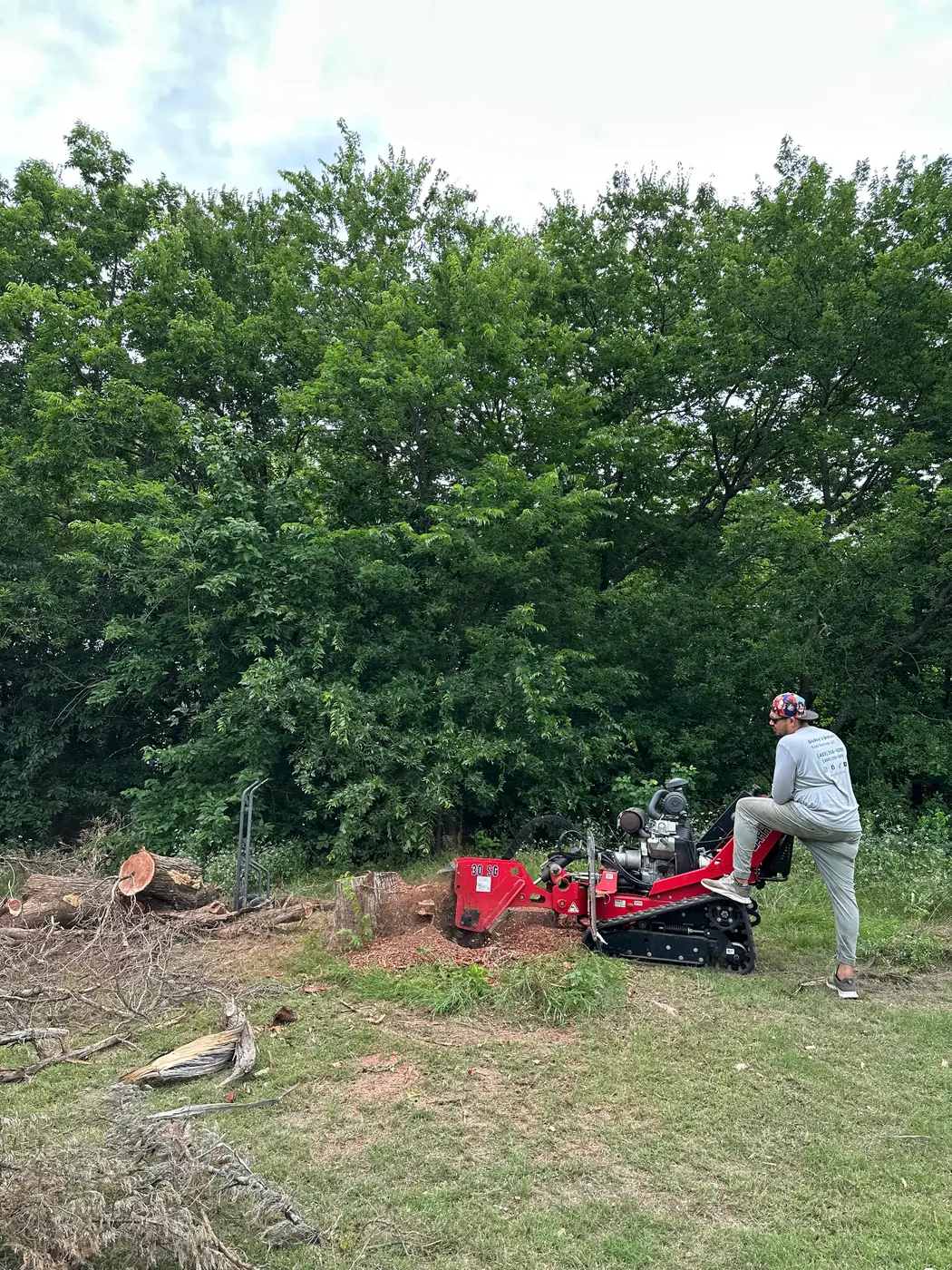
Most residential stumps are under an hour, and same-day is usually available. Large-diameter stumps, tight access that forces a smaller machine, or a property full of them will take longer, and you get that estimate before we start rather than after.
Will you hit my sprinkler lines?
Not if we can help it, which is why we locate first. Irrigation, gas, and low-voltage lighting all run shallow on North Texas lots and rarely where the plans say. If you know where lines run, tell us. Anything genuinely unavoidable gets flagged before we start rather than discovered afterward.