
Irrigation · August 13, 2026 · 6 min read
Why Your Sprinkler System Won't Turn On
Start with the cheapest possibility
Most sprinkler calls in Dallas-Fort Worth come down to four things: the controller lost power, one valve failed, a head is broken or buried, or the backflow device is shut off. Three of those you can check in about ten minutes, standing in the yard with your phone. The fourth is where Texas law gets involved.
Work through them in order. Skipping to the expensive answer is how people end up replacing a controller that was only unplugged.
The controller is blank or dead
Check the outlet first. Garage outlets in North Texas are often on a GFCI that trips during a storm, and the reset button is frequently on a different outlet in the same run. Press it and see if the display comes back.
If the display lights up but nothing runs, look for a rain sensor. A wet sensor holds the whole system off by design, and after a wet week it can stay swollen for days. Most have a bypass switch on the controller.
If the display is dead with a known-good outlet, the transformer inside the controller has usually failed. That is a replacement, not a repair.
One zone is dead, the rest are fine
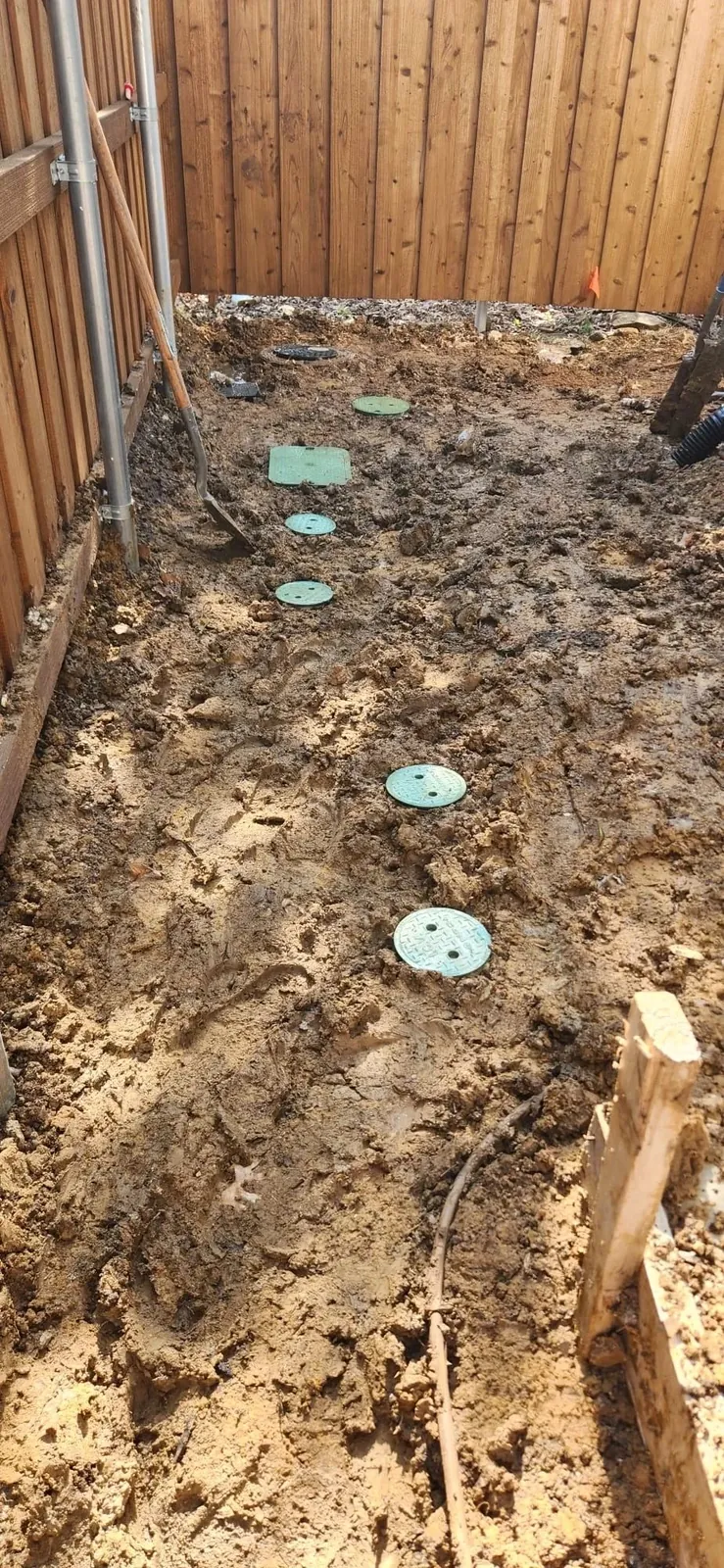
This is the most common failure we see, and it is almost always the valve for that zone rather than the controller. Open the valve box lid and look for water sitting in the box, which points at a leaking diaphragm.
Try running that zone manually from the controller and listen at the valve. A click means the controller is sending power and the solenoid is responding, so the problem is downstream in the valve body. Silence means the signal is not arriving, which is usually a cut or corroded wire.
Wire breaks are common along fence lines and anywhere a bed has been dug since the system went in. New landscaping and irrigation wire rarely coexist peacefully.
Every zone runs weak
When the whole system is soft, look upstream. The backflow preventer has two shutoff valves and at least one is often left partly closed after winterisation. Both handles should sit in line with the pipe.
A main line leak will also drop pressure everywhere. Walk the yard after a cycle and look for one patch that is wetter than the rest, or a spot that stays soggy for days in August. On our clay that stands out.
If pressure is fine at the hose bib but poor at the heads, the system itself is the problem rather than the house supply.
Heads that mist, spray sideways, or never pop up
Misting rather than spraying means pressure is too high for that head. Fine fog blows away before it reaches the grass, which is why a yard can run its full cycle and still go brown in patches.
A head that never rises is usually packed with soil or has been clipped by a mower. Sunken heads spraying into turf are the same story. Both are simple part swaps.
Heads spraying the driveway are not a fault, they are an adjustment. Most rotors and spray bodies have an arc screw on top.
Where Texas law draws the line
Texas requires a licensed irrigator for installing, altering, repairing, or servicing an irrigation system for compensation. Checking your own controller, resetting a GFCI, cleaning a head, or adjusting an arc on your own property is your business. Paying someone to open valves, run wire, or modify the system is regulated work, and the person doing it should hold a current TCEQ license.
Ask to see it. A contractor who is licensed will not mind being asked, and one who dodges the question has told you something useful.
The same applies to backflow testing, which is separately certified in most DFW cities and required annually on many systems.
When to stop and call us
Godoy's Wolves holds current irrigation licensing, so valve work, wire tracing, leak location, and controller replacement are all work we can legally do for you rather than hand off. Ask us for it, and ask the next contractor too.
Call Rafael and describe what the yard is doing. He runs every zone before quoting anything, because a dead zone is usually one failed valve and not the system replacement it often gets sold as. If the problem turns out to be drainage rather than irrigation, which happens often on North Texas clay, that is also our work.
Get a Free Estimate
Godoy's Wolves serves the entire Dallas–Fort Worth Metroplex. Licensed, insured, and ready to work.
Irrigation · Sprinklers · DFW · Troubleshooting